We have been on the road for just about 40 days . . . ‘bout time to start heading southward back home.
Charting a pathway through Pennsylvania, I found something I have always wanted to see … the work of renowned American architect, Frank Lloyd Wright.
“The mission of an architect is to help people understand how to make life more beautiful, the world a better one for living in, and to give reason, rhyme, and meaning to life.” – Frank Lloyd Wright, 1957
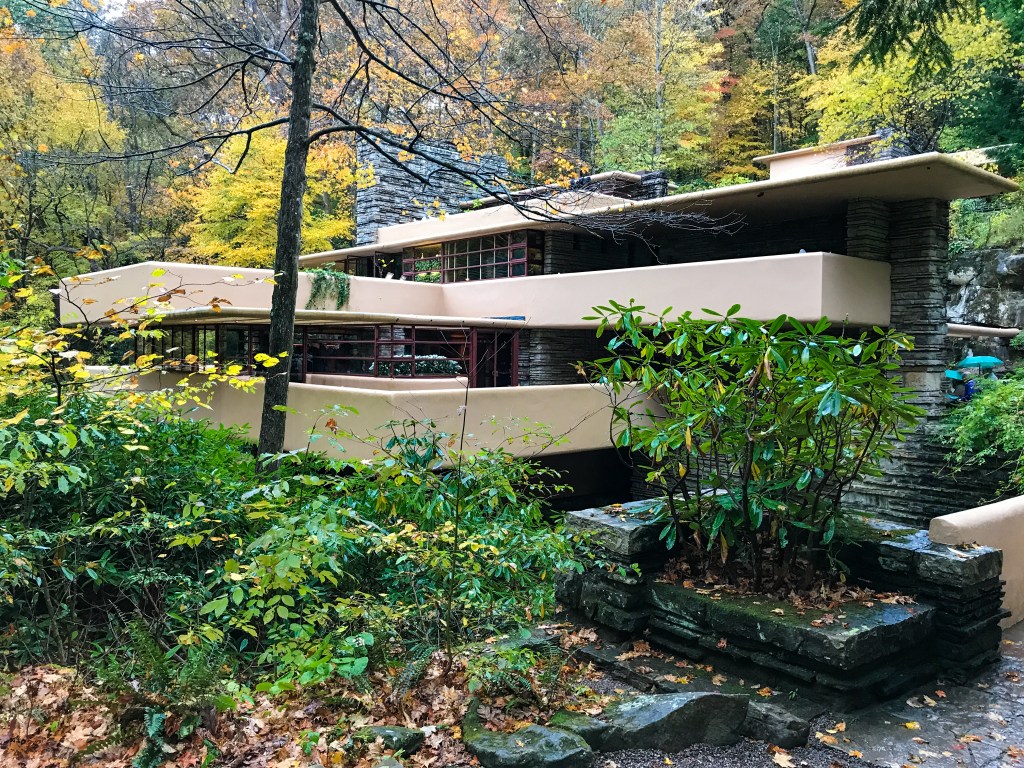
Ask the average citizen to name a famous American architect and you can bet that their answer will be Frank Lloyd Wright. Wright gained such cultural primacy for good reason: he changed the way we build and live. Designing 1,114 architectural works of all types — 532 of which were realized — he created some of the most innovative spaces in the United States. With a career that spanned seven decades before his death in 1959, Wright’s visionary work cemented his place as the American Institute of Architects’ “greatest American architect of all time.” He designed numerous iconic buildings such as Fallingwater and the Guggenheim Museum.*
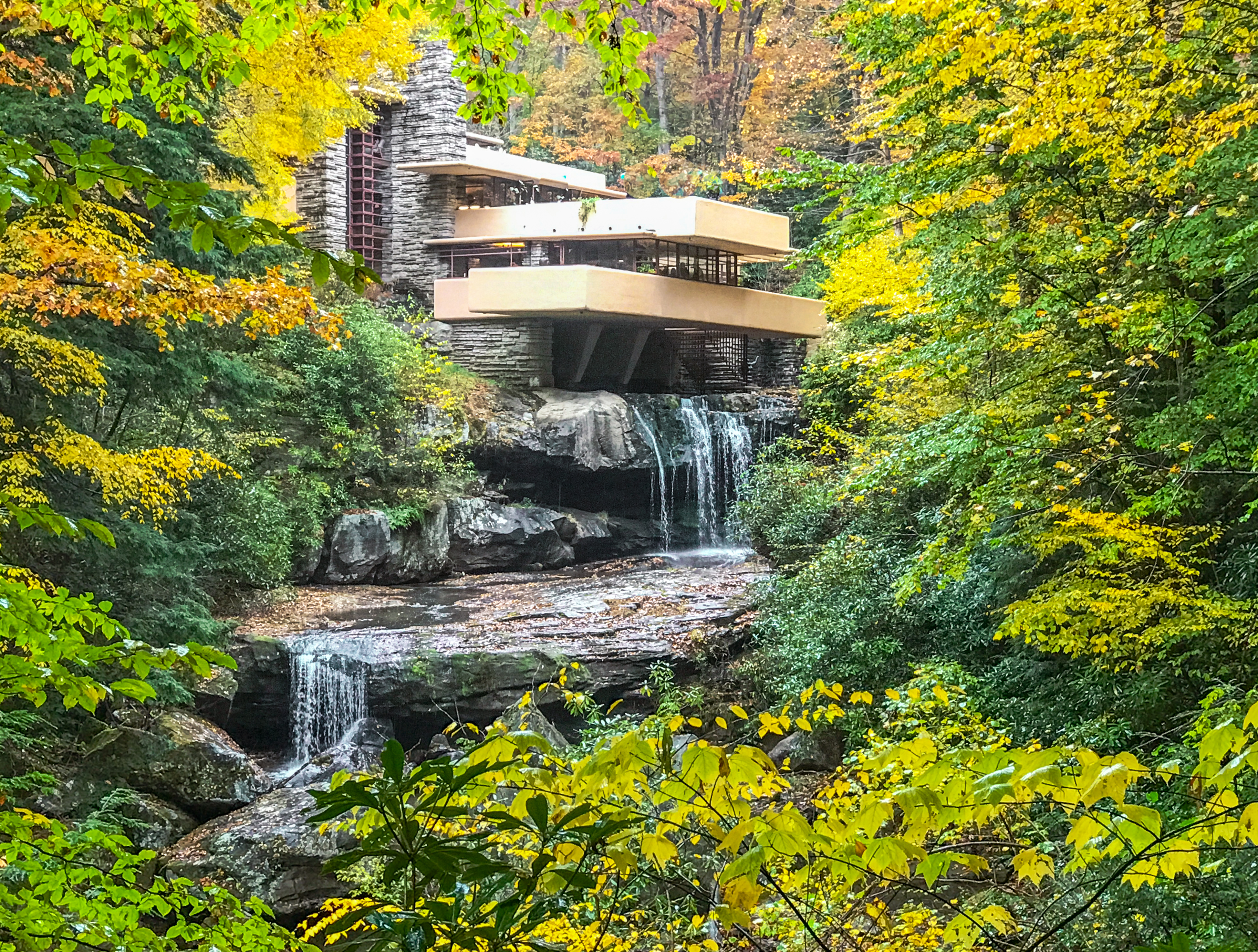
Fallingwater is likely the residence he is most known by simply from viewing a photo of the home. It is spectacularly built over a waterfall. It is representative of the Prairie Style.
Wright’s work from 1899 to 1910 belongs to what became known as the “Prairie Style.” With the “Prairie house”— a long, low, open plan structure that eschewed the typical high, straight-sided box in order to emphasize the horizontal line of the prairie and domesticity— Wright established the first truly American architecture. In a Prairie house, “the essential nature of the box could be eliminated,” Wright explained. Interior walls were minimized to emphasize openness and community. “The relationship of inhabitants to the outside became more intimate; landscape and building became one, more harmonious; and instead of a separate thing set up independently of landscape and site, the building with landscape and site became inevitably one.”*
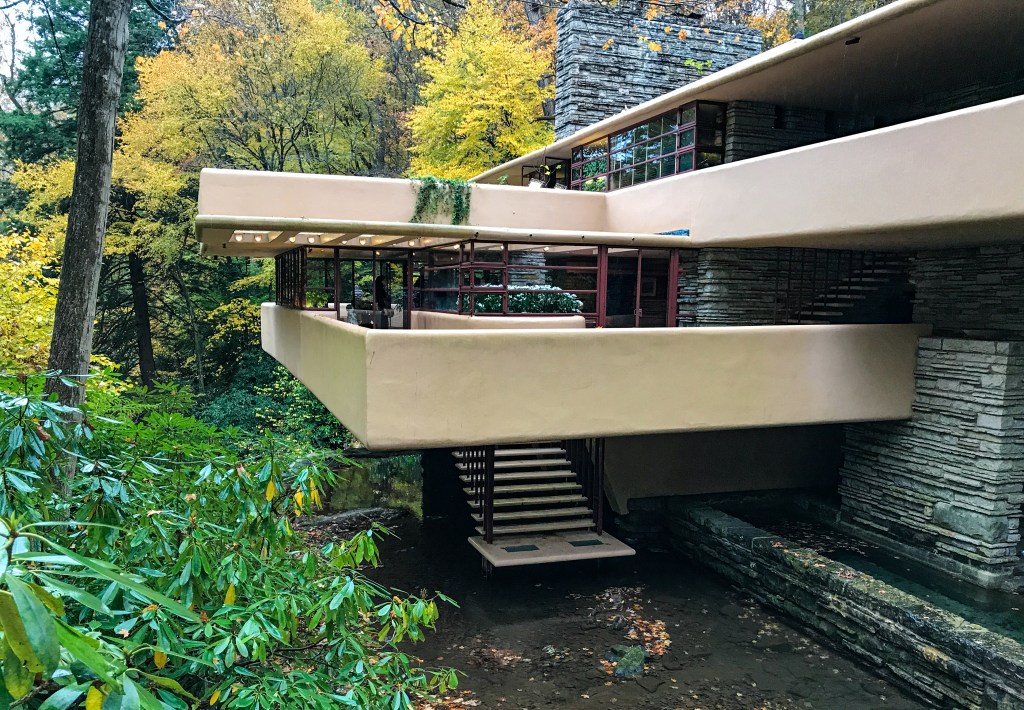
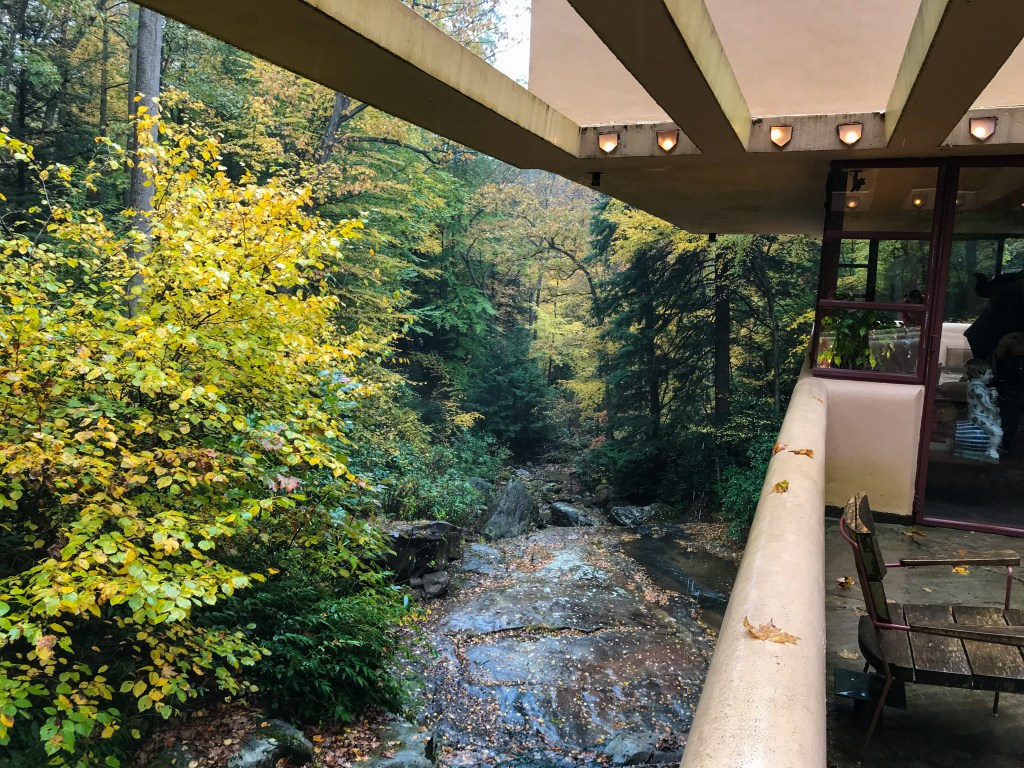
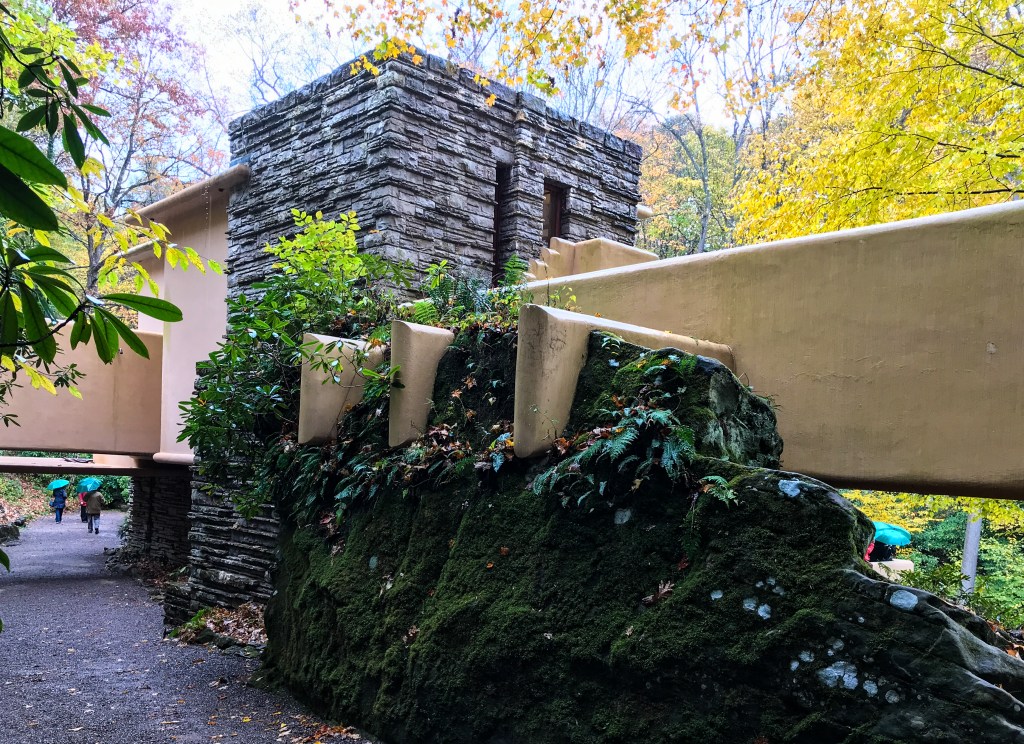
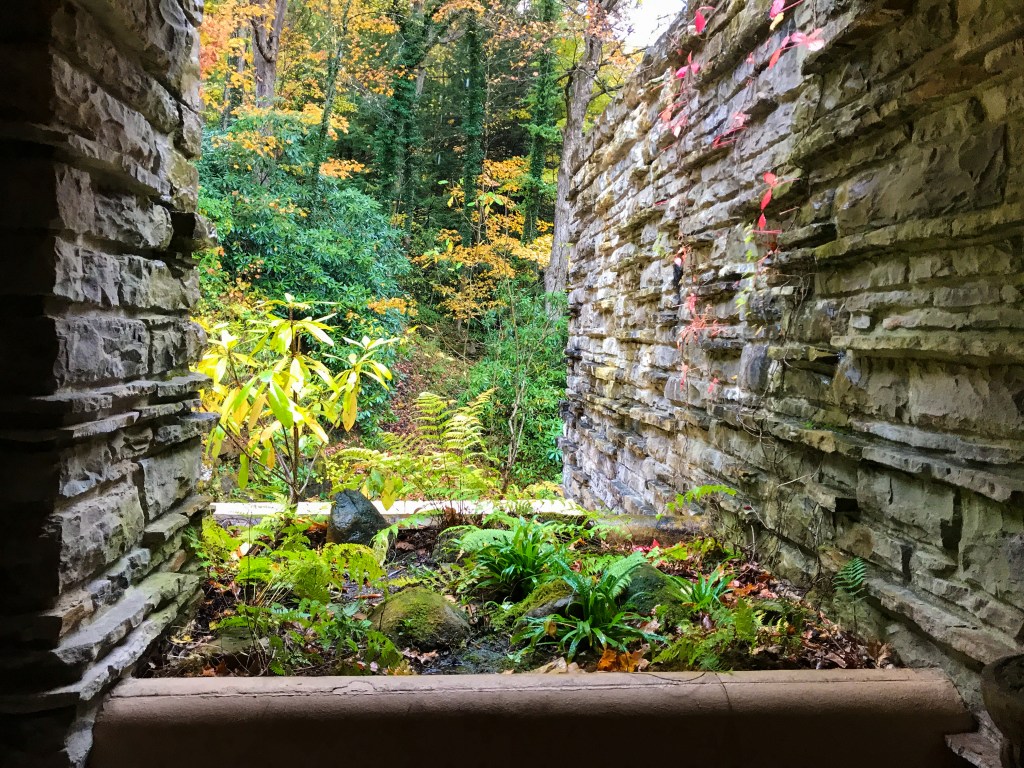
Kentuck Knob, is an example of the Usonian style. The home is compact, yet open at the same time. Wright employed a concept of “compression” and “release” – so upon entry, one was in a seemingly confined space that represented compression and then once entering the living space was “released” to openness, height and the outdoors.
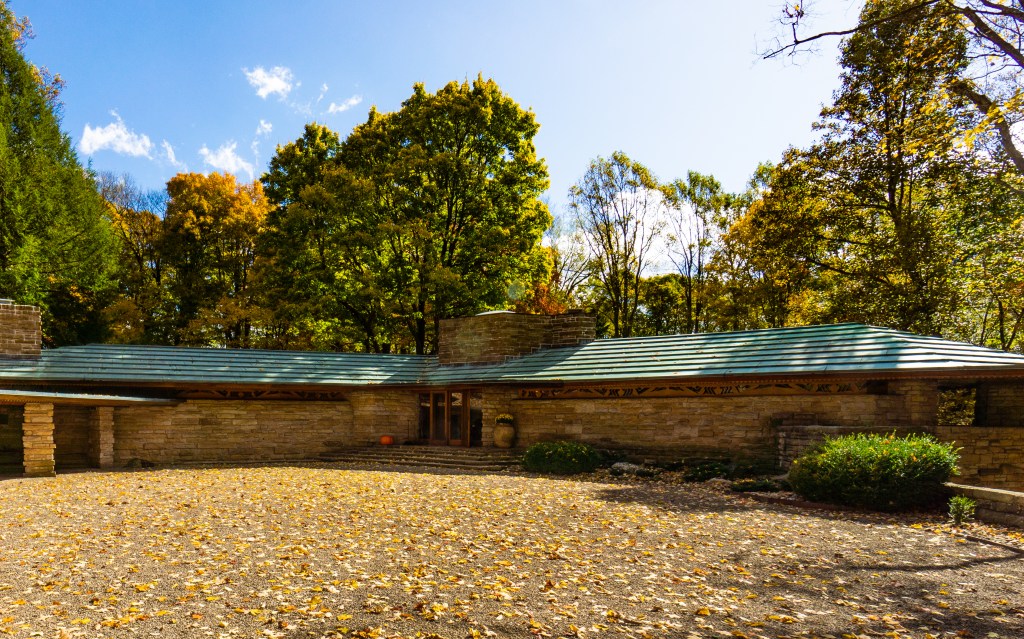
Responding to the financial crisis of 1929 and ensuing Great Depression that gripped the United States and the rest of the world, Wright began working on affordable housing, which developed into the Usonian house. Wright’s Usonians were a simplified approach to residential construction that reflected both economic realities and changing social trends. In the Usonian houses, Wright was offering a simplified, but beautiful environment for living that Americans could both afford and enjoy. Wright would continue to design Usonian houses for the rest of his career, with variations reflecting the diverse client budgets. *
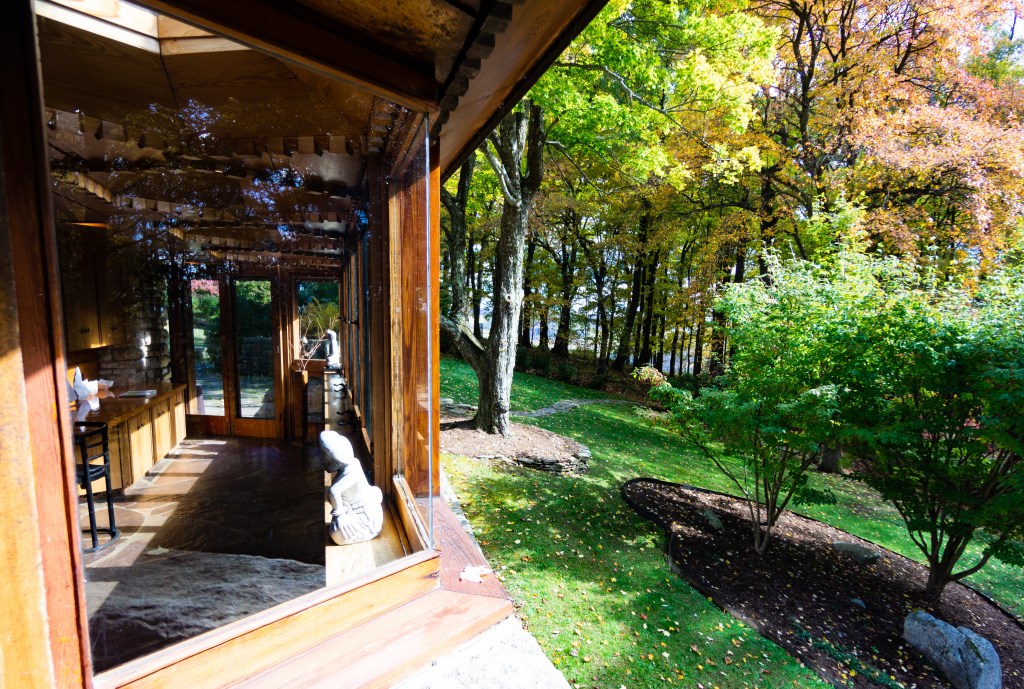
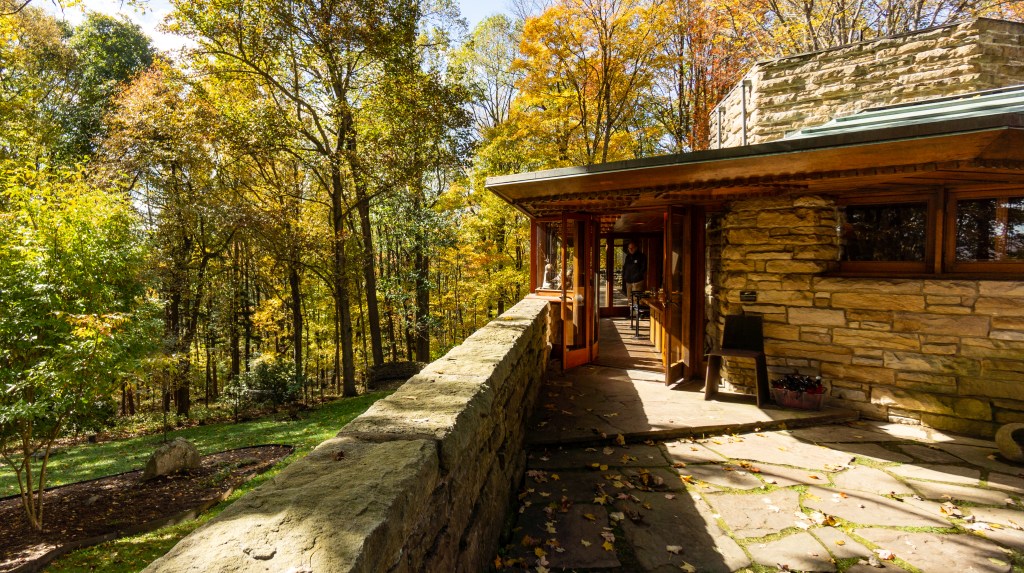
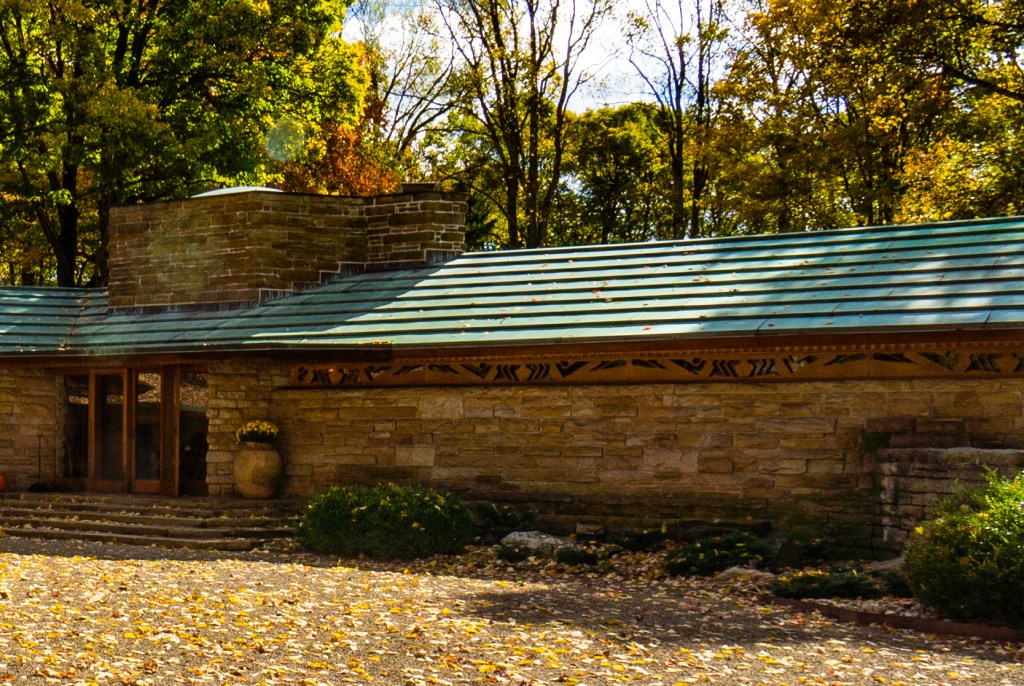
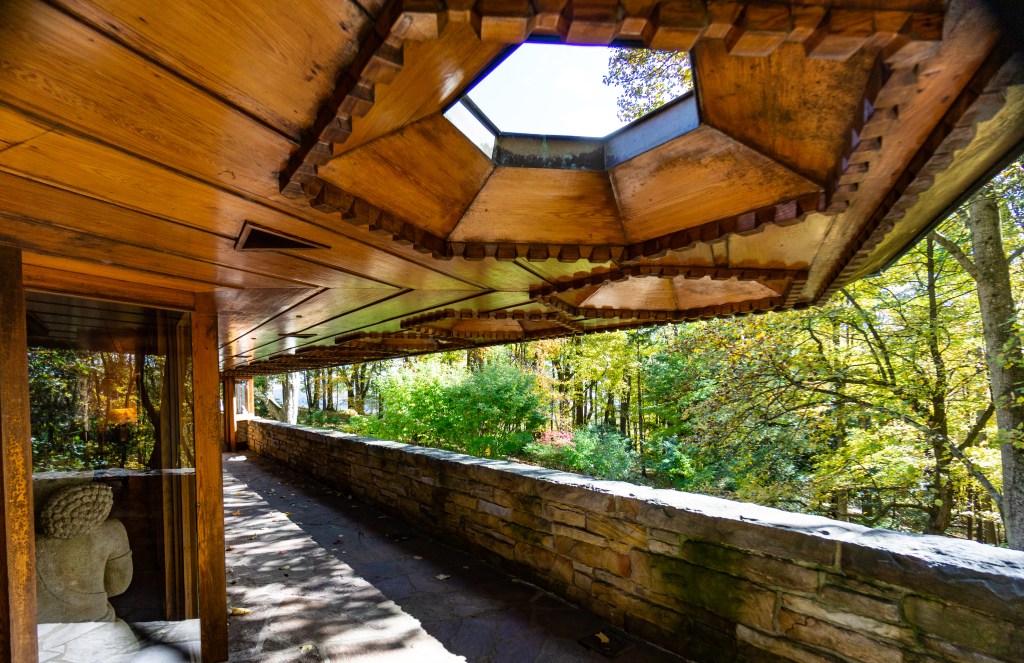
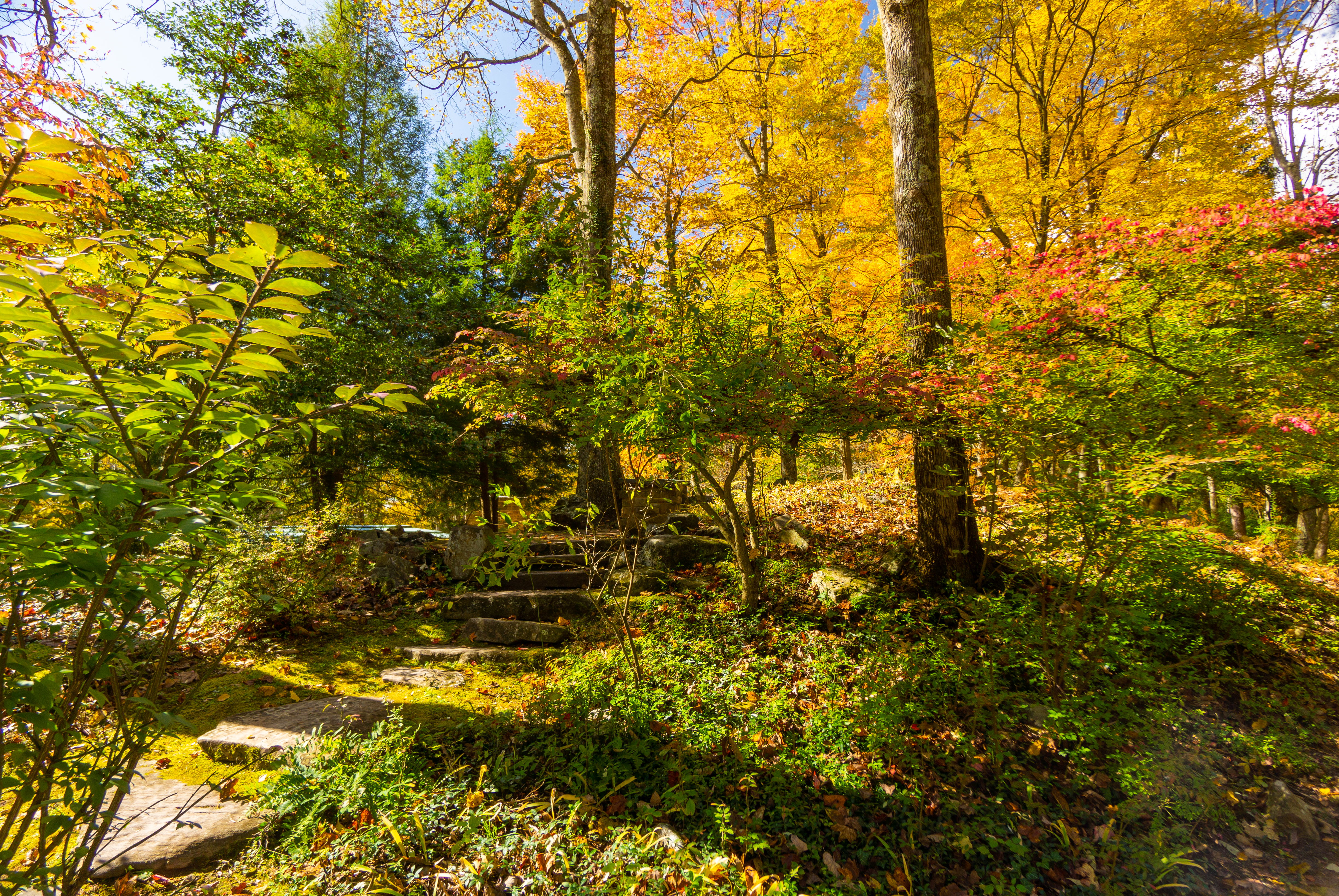
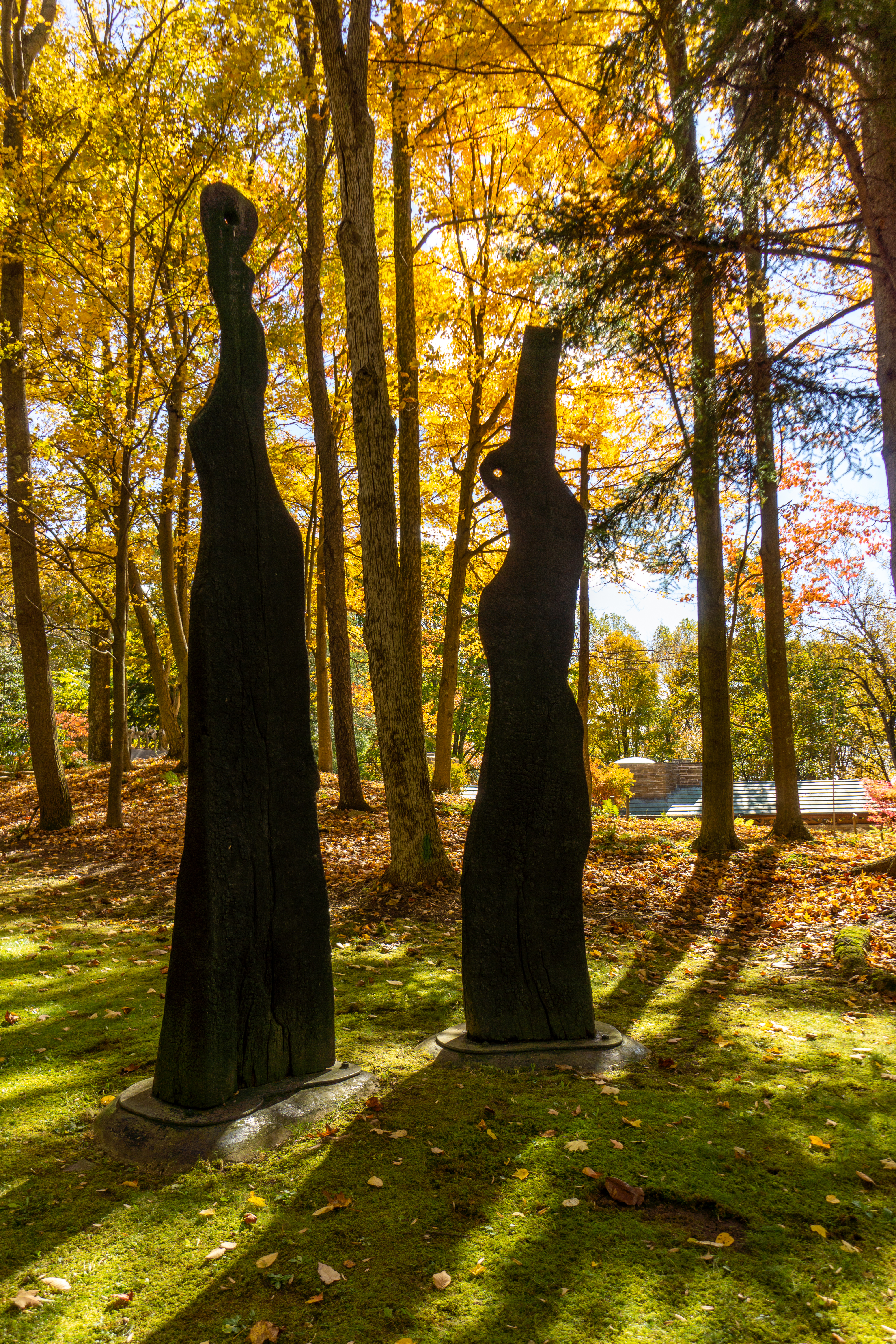
In my travels, I have had the opportunity to see a number of FLW homes and buildings. It was a special treat to be able to visit and tour Fallingwater and Kentuck Knob.
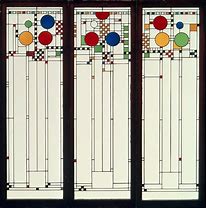
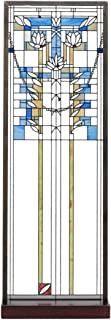
Stained Glass Windows
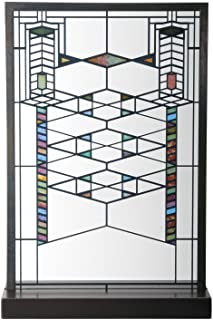
It is noted that he didn’t just design homes/buildings, he also designed the furnishings, many of which were built-in. There is also a plethora of stained glass windows he designed as an integral part the design of his prairie style homes. These designs have captivated my interest for many years as I have made stained glass pieces. They are most distinctive as are his homes.
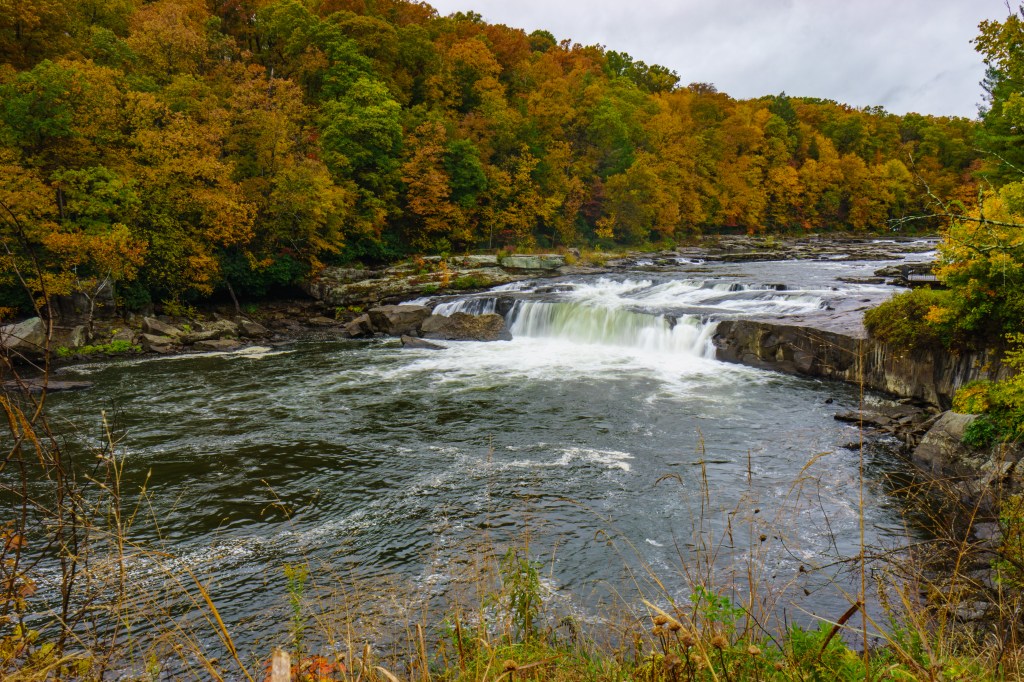
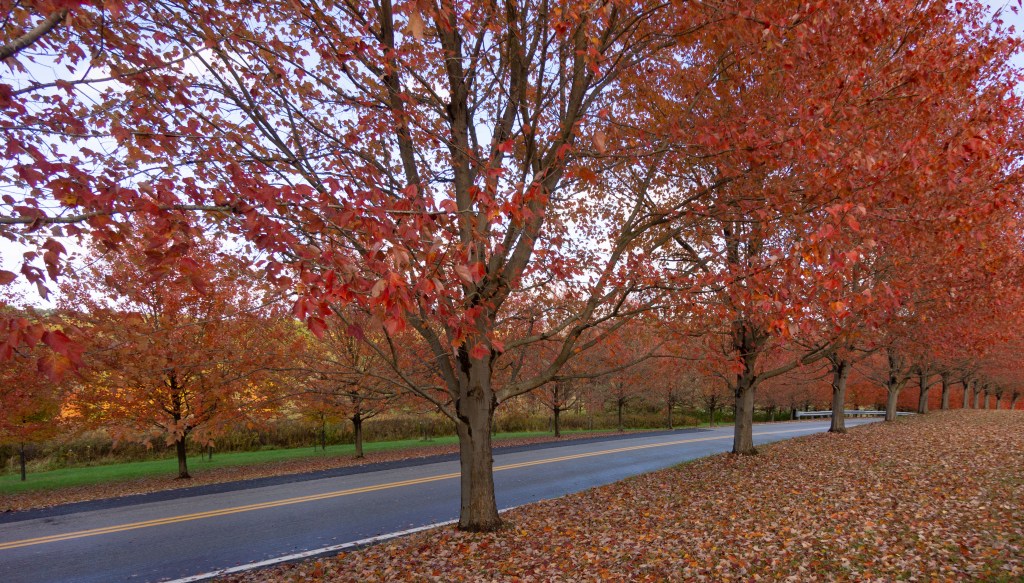
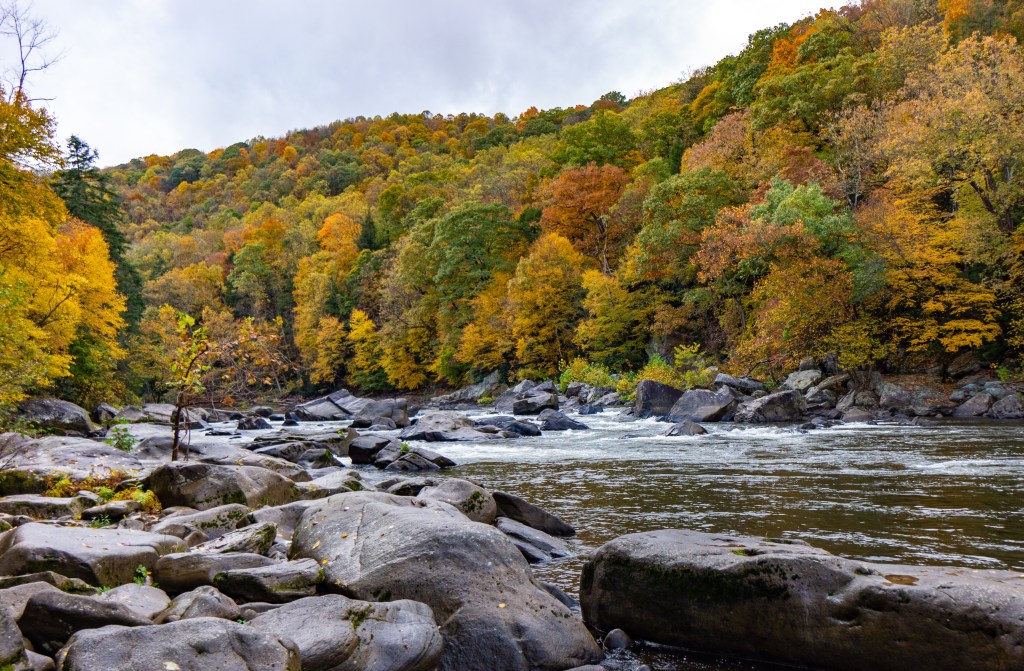
Fall Foliage coming out . . .
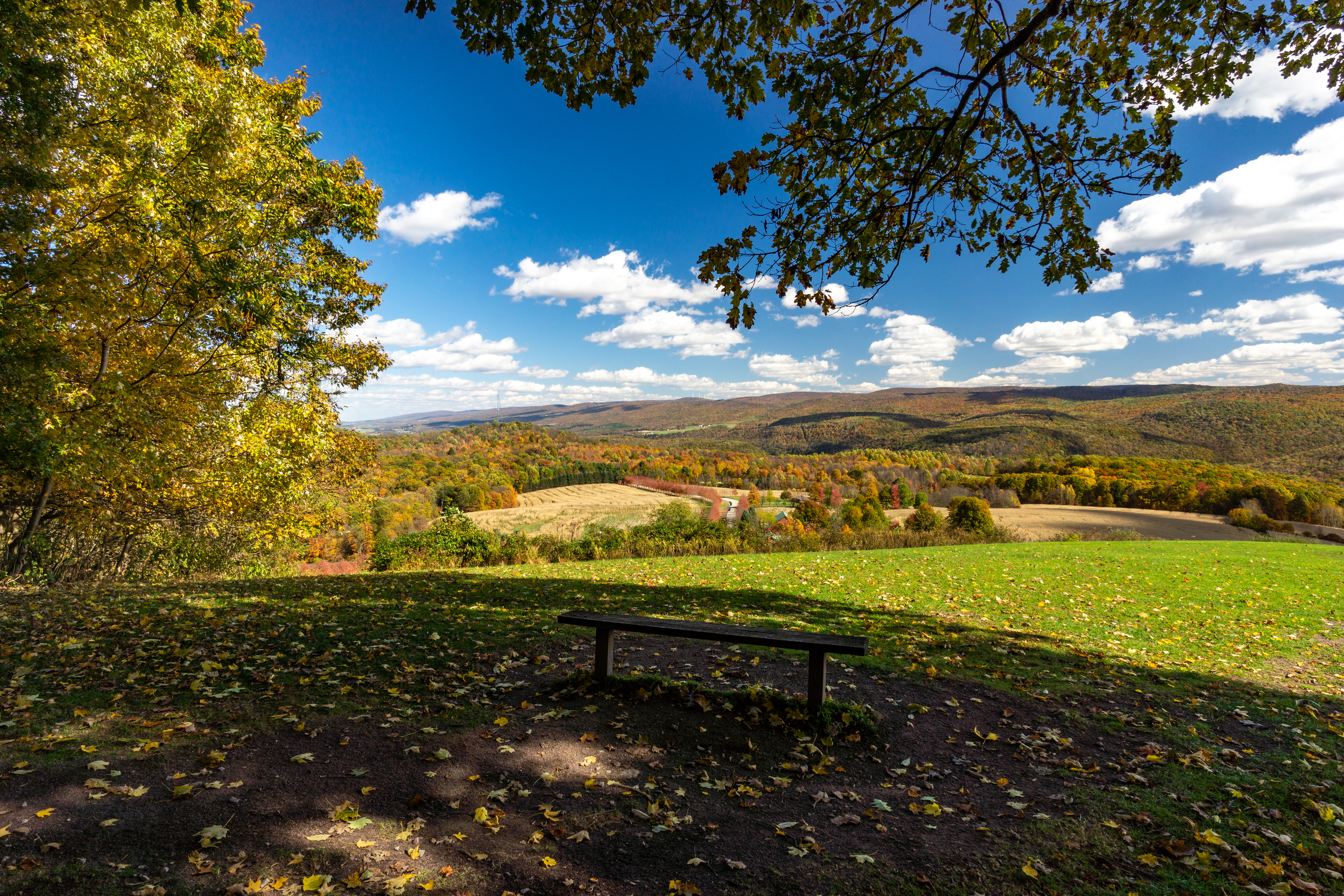
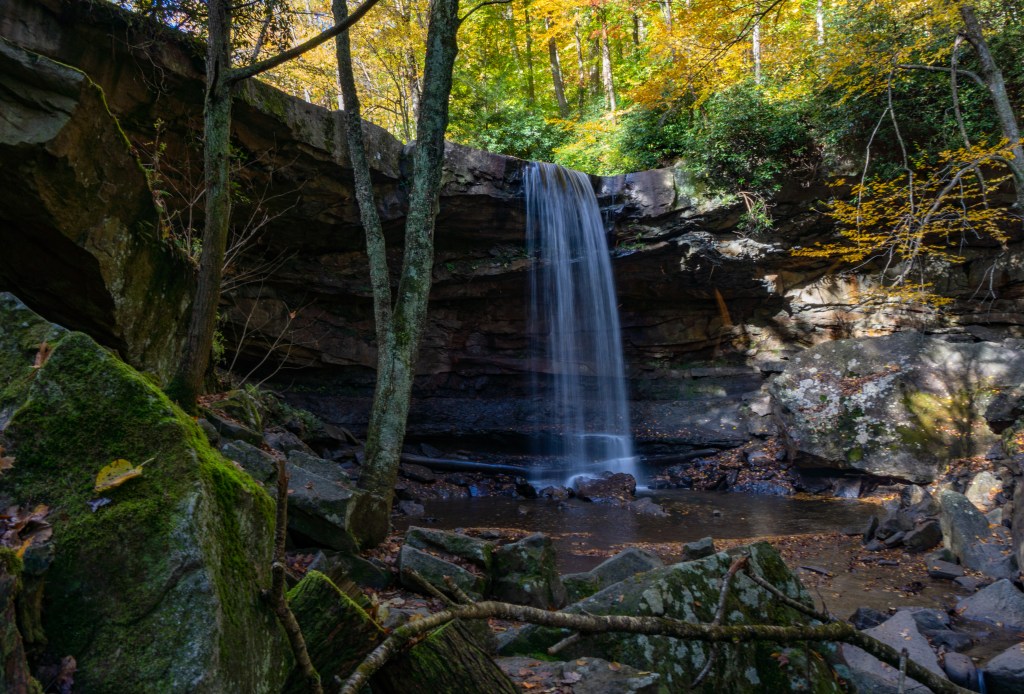
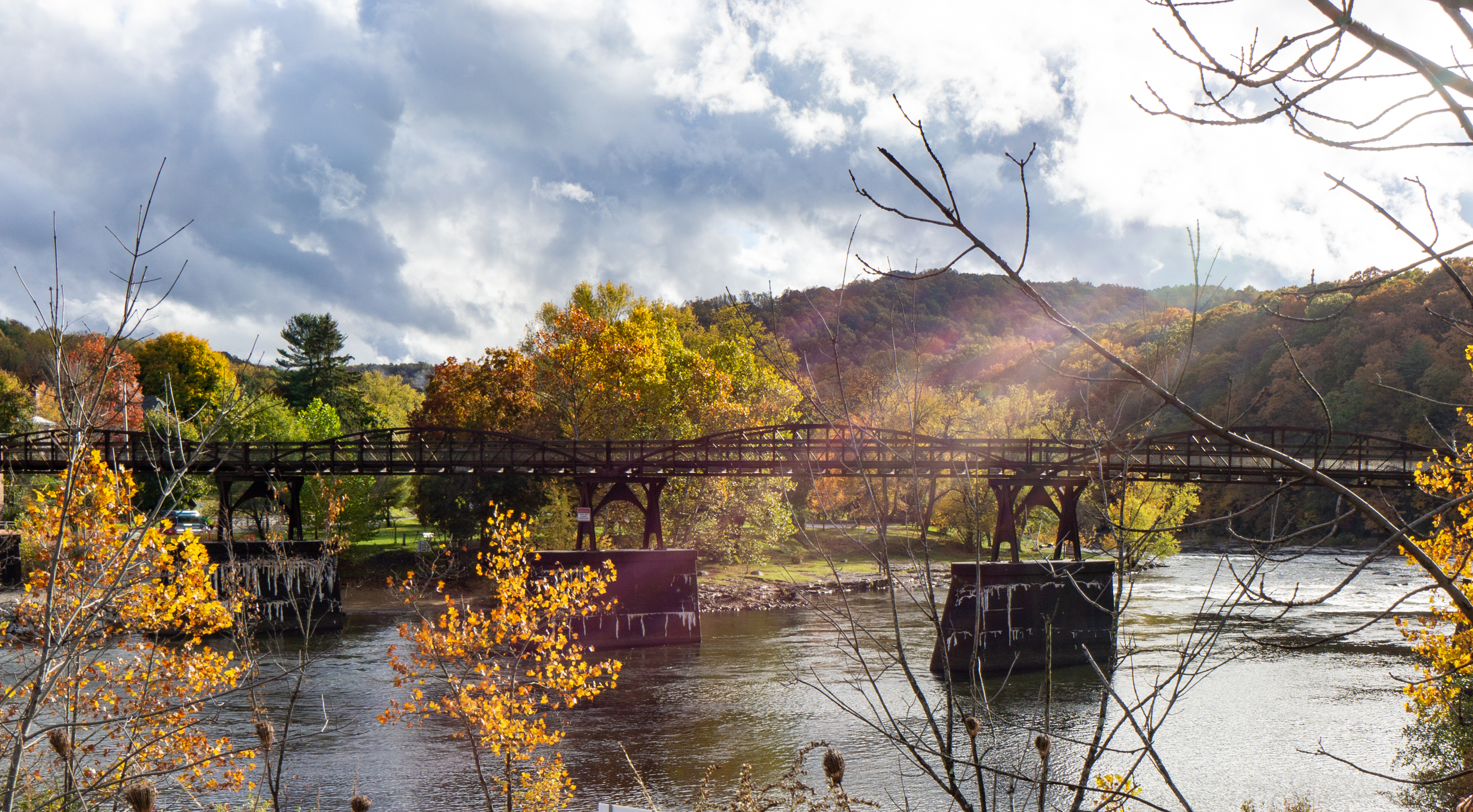
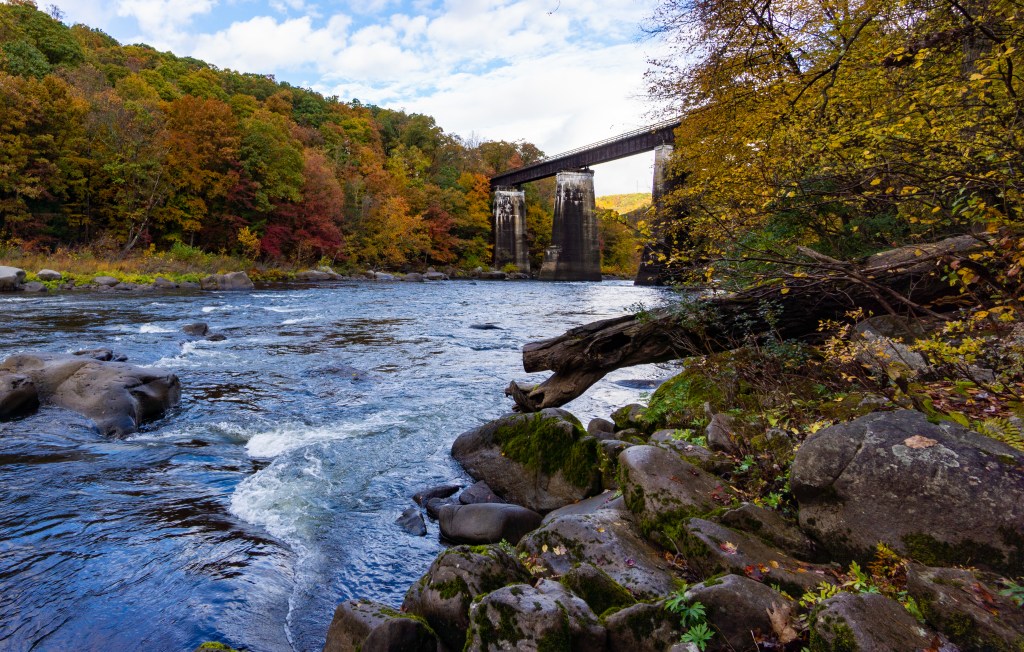
One thing about our extended travel time, we have slowly moved through the area as the leaves have continued to change. Less of the Red Maples, though scattered about, yet plenty of golden yellows and oranges to our delight.
* Sourced information on FLW was from FrankLloydWright.org
 Journey to New England